
South Korea’s First Approved ROS1 Diagnostic for XALKORI Therapy
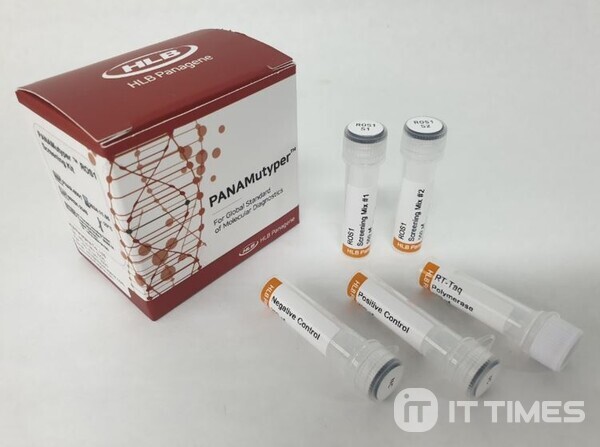
SEOUL, South Korea, February 5, 2025 (IT Times) - HLB Panagene has announced that its proprietary diagnostic product, PANAMutyper™ ROS1, has received approval from South Korea's Ministry of Food and Drug Safety (MFDS) as a companion diagnostic device for Pfizer’s targeted lung cancer therapy, XALKORI (crizotinib).
The PANAMutyper™ ROS1 diagnostic kit utilizes polymerase chain reaction (PCR) technology to detect mutations in the ROS1 biomarker, a critical genetic target in the prescription of ROS1 inhibitors. While next-generation sequencing (NGS) and PCR are both commonly used for biomarker diagnostics, NGS typically requires around two weeks for results. In contrast, PCR offers a faster alternative, producing results within a few hours and enabling quicker prescription of targeted cancer therapies for patients.
What sets PANAMutyper™ ROS1 apart is its test time, which is under three hours, making it faster than the only other approved PCR-based ROS1 diagnostic device, developed by China’s AmoyDx. The product also boasts improved user-friendliness, enhancing its competitiveness in the market.
With this approval, HLB Panagene plans to strengthen its companion diagnostic portfolio for non-small cell lung cancer (NSCLC) treatments, targeting key biomarkers such as EGFR, KRAS, and ROS1. The company aims to maximize the synergies between its products and expand its presence in the cancer diagnostics field.
"This approval is highly significant as it marks the first-ever companion diagnostic for the ROS1 biomarker developed in Korea," said Jang In-geun, CEO of HLB Panagene. "We will leverage this achievement to position ourselves as a global leader in the cancer companion diagnostic market, driving innovation and growth both locally and internationally."
Join Our Telegram Channel for Breaking News
IT Times YoungHa Kim (yhkim@ittimes.com)
관련기사
- HLB Aims for Three Cancer Drug Approval and Groundbreaking Tumor-Agnostic Therapy by 2026
- HLB Panagene Strengthens Global Presence in In-Vitro Diagnostics at Medlab Middle East 2025
- HLB Completes FDA’s CMC Inspection for Liver Cancer Drug Approval
- HLB NeuroTobe to Submit IND for Dystonia Treatment 'NT-1'
- HLB’s Rivoceranib Gains Attention as a New Treatment Option for Adenoid Cystic Carcinoma
- HLB Group Acquires ANYGEN to Expand Peptide-Based Therapeutics